
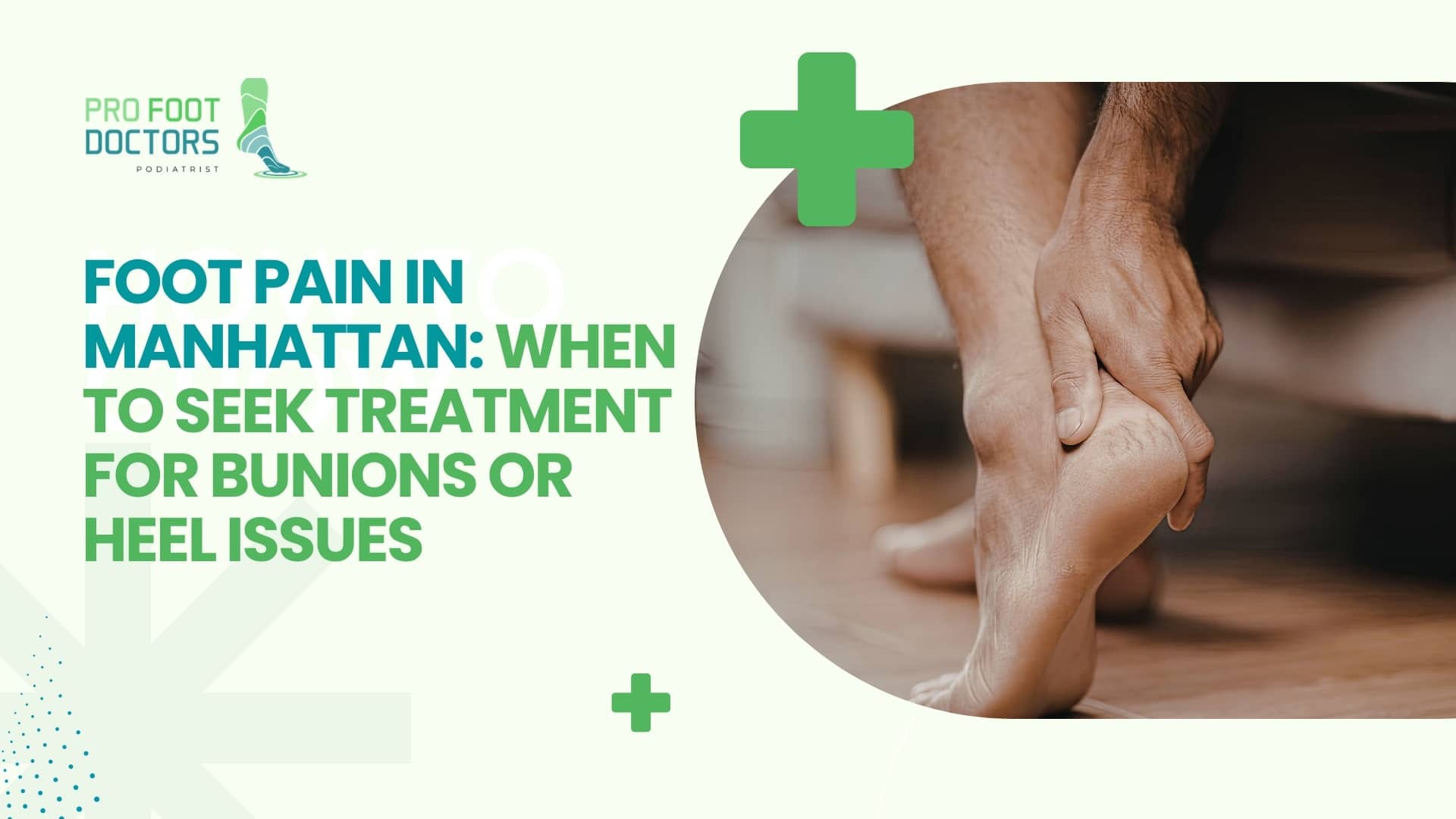
Foot pain is a major concern in places like Manhattan. When it becomes severe, it can quietly change how people walk or handle their daily activities. Even if you are experiencing a small discomfort from heel problems, the condition can become severe if not treated. It can even progress and interfere with your daily routine.
Bunions, for example, can develop when the joint at the base of the big toe shifts out of alignment. It can create a visible bump that becomes painful over time, especially when you wear tight footwear.
Most people usually delay getting treatment even if they have the condition. They ignore early symptoms or prefer to manage discomfort on their own. However, research shows that intervention becomes necessary when foot pain begins to affect your everyday activities.
What Bunions or Heel Pain Feels Like
Bunion pain usually develops at the base of the big toe. It is where a bony bump forms due to joint misalignment. The discomfort is often described as sore, aching, and pressure-sensitive, especially when walking or wearing shoes.
When the condition progresses, the area becomes swollen, red, and tender. Some people also experience stiffness or difficulty moving the toe. As a result, everyday movements become difficult. Common friction from tight footwear can further make the symptoms worse.
What does bunion pain feel like?
by u/rose_girl428 in bunions
However, if we talk about heel pain, it is linked to plantar fasciitis. It is commonly described as a sharp or stabbing sensation under the heel that you experience in the morning. Most patients in Manhattan report that the pain eases slightly with movement but worsens after a long day of standing or walking.
The discomfort also feels like tingling, burning, or deep aching when you get tired after a long, hectic day. So, why does this happen? The plantar fascia ligament tightens during rest and then strains when you begin walking again. It leads to irritation or small tears.
When Does Foot Pain Become a Medical Concern
You should not ignore foot pain if it becomes severe, worsens over time, or begins interfering with your daily activities. Signs that show it’s time to get medical treatment include:
- Ongoing swelling
- Visible deformity (like a bunion bump)
- Sharp heel pain that doesn’t go away
- Difficulty walking comfortably.
So, When Should You Go To A Foot Specialist
Pain Starts Interfering with Your Routine
You should see a podiatrist when bunions or heel pain begin to interfere with your routine activities. It becomes difficult for you to stand, commute, or even walk short distances. A continuous discomfort can limit mobility.
When The Pain Is Not Occasional
Occasional soreness after a long day does not need immediate care. However, ongoing pain is different. Bunions are of different types. Some remain mild, while others get worse over time and cause difficulty in walking. If the pain is no longer temporary and continues across days or weeks, you need a professional checkup.
You Notice Structural Changes in The Foot
There must be:
- A visible bump at the base of the big toe, or
- shifting of the toe toward others, or
- reduced joint movement
These are not just cosmetic concerns. It shows joint misalignment that worsens without treatment. The condition shows less mobility or difficulty fitting into regular footwear. So you need to consult a specialist.
Your Feet Hurt After Wearing Shoes
Footwear is not only about comfort for Manhattan residents, but also practicality. Many people spend long hours on their feet. If bunions make it difficult to find shoes that fit properly or cause discomfort even in supportive footwear, it shows the condition is becoming worse.
Pain Becomes Severe
Surgery is generally not the first step. However, it becomes necessary when pain is severe or impacts your quality of life. So, surgical intervention is required when pain is continuous or resistant to conservative care, not for cosmetic reasons.
Non-Surgical Methods Fail
If you have an early-stage bunion or heel pain, it can be managed with orthotics, wider footwear, or activity adjustments. However, if these options don’t provide relief, it means the condition is advanced. So, the option is to move towards the surgical solution when the symptoms get worse or conservative treatments fail.
Walking Patterns Change
When bunions progress, or heel pain gets worse, people unconsciously adjust how they walk to avoid discomfort. Over time, it can affect gait and place stress on other joints. Worsening function, such as uneven walking, limping, or reduced endurance, is a sign that the condition is no longer minor.
Why an Early Checkup Is Needed in Manhattan
The city demands a lot of walking, so if you delay care, it can quickly turn manageable discomfort into a chronic condition. What starts as mild irritation can become joint stiffness, inflammation, or long-term mobility issues. It is important to get medical advice for less invasive treatment options. The solution helps maintain an active lifestyle in a fast-paced urban environment.