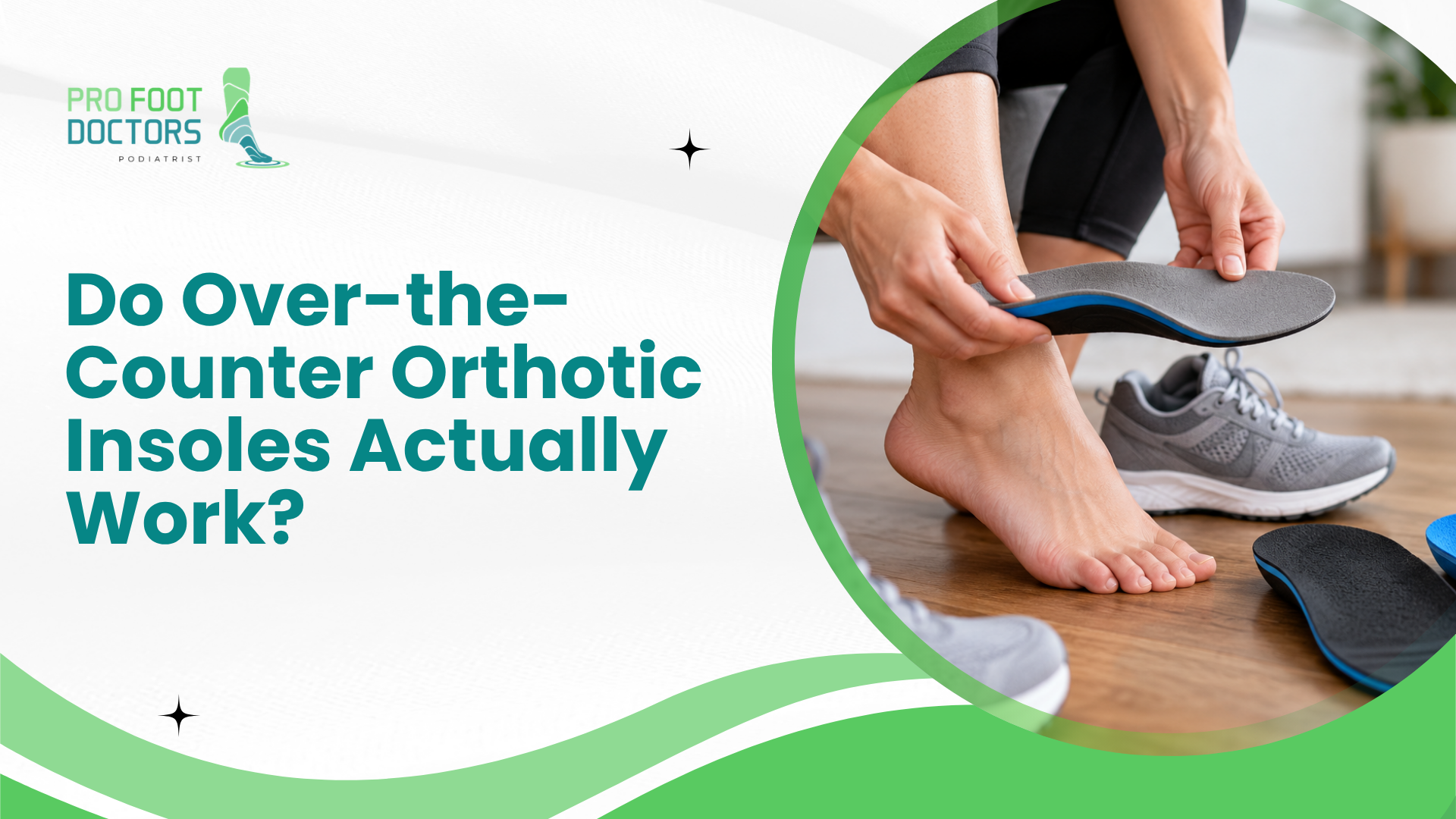
Do Over-the-Counter Orthotic Insoles Actually Work?
While Over-the-Counter insoles is not a scam, they are certainly no panacea for your foot problems. While a good insole from your local pharmacy will serve to cushion your feet and give some support to the arches when they get tired, it cannot serve as a replacement for custom-made orthotics prescribed by a podiatrist.
What Over-the-Counter Insoles Are Actually Designed For
The OTC insoles come for the generic foot shapes. The store-bought insoles are created taking into account average foot shapes and dimensions of feet and arches. They do not provide a fit for your specific foot anatomies and dynamics.
They offer you mild and everyday comfort over-the-counter insoles that work the best when it comes to coping with foot tiredness because of standing on a hard surface, walking long distances or wearing flat-soled shoes.
Although there is confusion between the words "insoles" and "medical orthotics" in most marketing materials, associations such as the American Academy of Orthopaedic Surgeons (AAOS) provide a broad definition of orthotic devices to encompass both pharmacy and customized orthotics.
Pharmacy orthotics may be soft, semi-rigid, or rigid and provide useful cushioning, arch support, weight distribution, and slight biomechanical correction. Prescription custom orthotics, on the other hand, are specific to an individual’s needs and are designed to address their medical problems.
When OTC Insoles Can Genuinely Help
Ready-made inserts may also be considered a cost-effective solution if used correctly. The instances when ready-made inserts should be used include:
- When one feels fatigue owing to staying on their feet for a long time.
- To add extra padding to work boots or sports footwear.
- Prior to foot evaluation by a podiatrist.
Where OTC Insoles Fall Short
Due to the nature of mass-produced insoles being made for the average person’s feet, there are obvious medical limitations to these products:
- Persistent foot problems such as plantar fasciitis, rigid flat feet, and high arches may require specialized supportive care. However, it should be remembered that OTC or even custom inserts cannot remedy a bunion deformity but, according to the American Academy of Orthopedic Surgeons (AAOS), both types of orthotics can be used to reduce the pressure on the affected joint.
- While OTC insoles may offer minor pronation support or temporary pressure redistribution for some individuals, clinical evidence is limited, and generic inserts are rarely sufficient to address significant leg length discrepancies or complex alignment issues.
- Foam and gel OTC insoles will eventually lose their shape and any support that it may have provided before.
Custom Orthotics vs. OTC Insoles: What’s the Difference?
Understanding the distinction between drugstore inserts and prescription devices helps you make an informed decision for your foot health.
| Feature | Over-the-Counter Insoles | Prescription Custom Orthotics |
| Manufacturing | Mass-produced generic shapes. | Custom-molded from 3D scans or physical impressions of your feet. |
| Primary Function | General cushioning and basic arch support. | Corrects specific biomechanical errors and offloads painful areas. |
| Diagnostic Basis | Selected by the consumer off the shelf. | Prescribed following a thorough clinical evaluation of foot structure, symptoms, and medical history. |
| Material Durability | Soft foams/gels that compress relatively quickly. | Designed for long-term use, though actual durability depends on material type, daily wear, patient weight, and foot condition changes. |
Signs You Need More Than an OTC Insole
If you have been suffering from continuous pain in your feet or heels for more than two weeks, even though you are wearing supportive shoes, then using another over-the-counter insert will not resolve the problem.
In particular, if your feet experience sudden heel pain when stepping out of bed in the morning, or after resting for a while, then this might be an indication of plantar fasciitis.
Moreover, symptoms related to nerve damage, such as tingling, numbing or burning sensations in your feet or toes, as well as changes to the structure of your feet, including bunions, hammertoes or collapsed arches, need to be clinically evaluated.
Important Information for Diabetics: Patients with diabetes, peripheral neuropathy, or poor circulation should exercise caution when selecting footwear inserts. According to clinical guidelines from the International Working Group on the Diabetic Foot (IWGDF), therapeutic orthotics are designed to redistribute peak plantar pressure and reduce shear stress across vulnerable areas of the foot. The wrong inserts may lead to friction and cause blisters or non-healing ulcers.
Learn more about specialized diabetic foot care.
How to Get the Most Out of OTC Insoles
When you need to decide to go for ready-made insoles as a comfort aid for daily usage, consider the following pointers in maximizing their effectiveness:
- Make sure that the insole will fit the volume of the shoe, and cushioned insoles should be used for running and working shoes and not for dress shoes.
- Whenever the insole's arch support and heel foam are flattened, you must change them right away.
- Insoles should be used to increase comfort and not to hide pain.
Get a Precise Diagnosis for Persistent Foot Pain
If off-the-shelf inserts haven't solved your foot discomfort, our team can perform a thorough biomechanical assessment to determine the exact root of your symptoms.
Book an Appointment with Pro Foot Doctors Today
Frequently Asked Questions
Are OTC insoles a waste of money?
No, not necessarily. They are a reasonable choice for minor arch pain or to provide additional cushioning for your shoes with hard soles. But they won't solve your problems if you have a diagnosed medical issue or structural problem.
Can OTC insoles fix flat feet or plantar fasciitis?
OTC insoles cannot permanently alter the anatomical structure of flat feet, but they are often useful for managing discomfort. A supportive OTC insert can help redistribute pressure, support flexible arches, and ease strain associated with plantar fasciitis. For severe or persistent pain, our podiatrists at Pro Foot Doctors can evaluate whether targeted medical treatment or custom devices are needed.
How do I know if I need custom orthotics instead?
You will probably require custom orthotics if your discomfort has been going on for more than two weeks, is made worse by exercise, interferes with your ability to exercise, or is the result of an incorrect structure that regular orthotics will not solve.
How often should I replace OTC insoles?
There is no set replacement rule, as an insole's durability depends on the materials used, how often they are worn, and body weight. Instead of replacing them on a fixed schedule, monitor the inserts for physical signs of breakdown, such as compressed foam, worn fabric, or reduced arch support, and replace them when they no longer provide adequate cushioning.
Will a podiatrist ever recommend OTC insoles?
Yes. In case of slight or temporary fatigue, or for those patients who require only slight cushioning in their sports shoes, the podiatrist might recommend an excellent over-the-counter brand of orthotics.